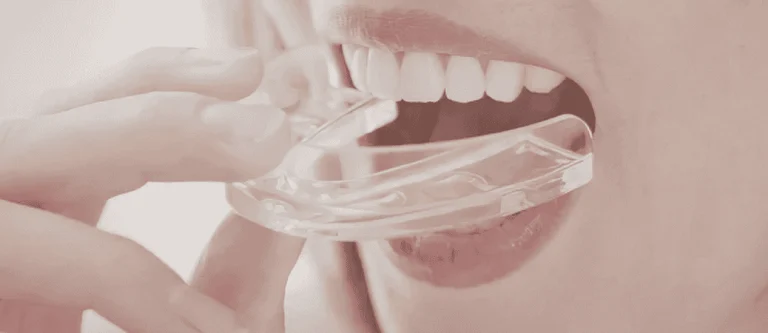


A toothache might seem like a minor annoyance you can push through, but it’s your body sending you an urgent message that something is wrong.
Many people try to wait out tooth pain, hoping it will fade on its own. Unfortunately, what starts as mild discomfort can quickly turn into a serious problem that affects not just your oral health but your overall wellbeing.
Tooth pain is rarely harmless and almost never goes away without treatment because it signals underlying issues like decay, infection, or damage that will only get worse over time.
Ignoring a toothache can lead to serious consequences including infections that spread beyond your mouth, more complex procedures, and significantly higher treatment costs.
The good news is that recognizing the warning signs early gives you the best chance for simple, effective treatment.
Understanding which symptoms require immediate attention can help you protect your teeth and avoid painful complications. Let’s look at the seven warning signs that mean your toothache needs professional care right away.
Key Takeaways
- Persistent tooth pain indicates an underlying problem that requires professional dental treatment to prevent serious complications
- Certain warning signs like severe pain, swelling, fever, or difficulty breathing mean you need emergency dental care immediately
- Early intervention saves you from more invasive procedures, higher costs, and potential health risks down the road
Why Persistent Tooth Pain Is a Serious Warning
Tooth pain that doesn’t go away points to problems beneath the surface that need professional care. The difference between a quick twinge and ongoing discomfort can help you know when to seek treatment.
How Toothaches Signal Deeper Dental Problems
Your tooth pain is often your body’s way of alerting you to issues you can’t see.
When you have persistent tooth pain that lasts more than a day or two, it usually means something is wrong inside the tooth or in the surrounding tissues.
Cavities are one of the most common causes. When tooth decay reaches the inner layers of your tooth, it affects the nerve and causes ongoing pain.
An abscessed tooth happens when bacteria create an infection at the root, leading to severe pain and swelling.
Gum disease can also trigger tooth pain even when the tooth itself seems fine. The infection damages the bone and tissues that hold your teeth in place. This creates discomfort that feels like it’s coming from the tooth.
Difference Between Occasional and Chronic Tooth Pain
Occasional sensitivity when you eat ice cream or drink hot coffee is usually not a major concern. It might fade within seconds or minutes. Chronic tooth pain, however, stays with you or keeps coming back throughout the day.
Signs of occasional tooth pain:
- Quick, sharp sensation that disappears fast
- Happens only with certain foods or drinks
- No swelling or other symptoms
Signs of chronic tooth pain:
- Throbbing or constant ache
- Pain that wakes you up at night
- Discomfort that lasts hours or days
Chronic pain signals serious underlying problems that require immediate dental attention. Waiting too long can turn a simple cavity into a more complex issue requiring extensive treatment.
7 Warning Signs You Shouldn’t Ignore a Toothache
Your body sends clear signals when something’s wrong with your teeth. Pain that won’t go away, swelling that changes your face shape, or trouble opening your mouth all point to problems that need quick attention from a dentist.
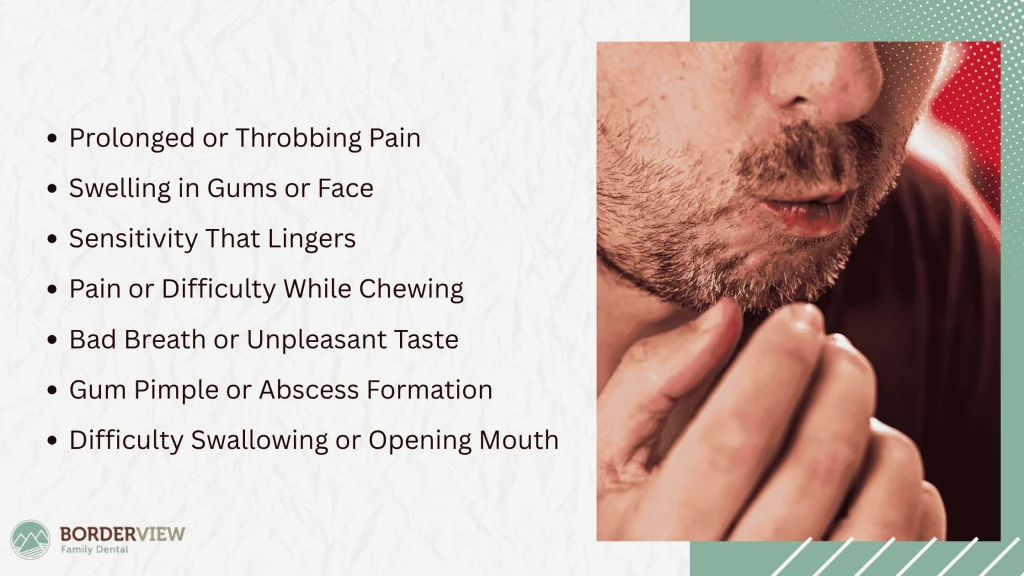
Prolonged or Throbbing Pain
Persistent tooth pain that lasts more than a day or two means something serious is happening inside your tooth. This isn’t the quick twinge you feel when you bite into ice cream.
This is pain that stays with you throughout the day and often gets worse at night.
Throbbing pain feels like your heartbeat is pulsing inside your tooth. This usually means the nerve inside your tooth is infected or dying. The infection creates pressure that has nowhere to go, which causes that pounding sensation.
Over-the-counter pain medicine might help for a few hours, but the pain keeps coming back. When you reach for pain relievers multiple times a day just to get through normal activities, your tooth is telling you it needs professional help.
An abscessed tooth or severe dental infection won’t heal on its own and requires treatment like a root canal or extraction.
Swelling in Gums or Face
Any visible swelling around a tooth signals an active infection in your mouth. You might first notice a small bump on your gum near the painful tooth. Some people see their cheek puff out or notice their face looks uneven in the mirror.
Swelling means your body is fighting bacteria that have spread beyond the tooth itself. The infection can move quickly from a small gum bump to your entire cheek, jaw, or even down into your neck.
This type of swelling feels tender when you touch it and may feel warm compared to other areas of your face.
Don’t wait if you notice:
- A bump or pimple on your gum
- Puffy or swollen cheeks
- Jaw swelling that makes your face look different
- Redness around the swollen area
Facial swelling from a tooth infection can become dangerous if it spreads to areas that affect your breathing. This is a dental emergency that needs immediate care.
Sensitivity That Lingers
Sensitive teeth are common, but there’s a big difference between normal sensitivity and a warning sign. Brief sensitivity that lasts a few seconds when you drink something cold is usually not serious.
The kind of sensitivity you shouldn’t ignore lasts 30 seconds or longer after you remove the hot or cold food or drink.
This prolonged sensitivity happens when the nerve inside your tooth becomes inflamed or infected. You might first notice it with your morning coffee or when eating soup. The pain lingers in your tooth long after you’ve finished your meal.
Pay attention to these patterns:
- Pain that continues after finishing hot or cold foods
- Sensitivity that gets worse over days or weeks
- Sharp pain that makes you stop eating certain foods completely
The longer the sensitivity lasts, the less likely your tooth nerve will heal without treatment. What starts as annoying sensitivity can turn into constant pain if the nerve damage gets worse.
Pain or Difficulty While Chewing
Sharp, intense pain when you bite down on food points to several possible problems. You might have a cracked tooth, a loose filling, or an infection at the root of your tooth.
Many people describe this as feeling like they’re biting on something electric.
This type of jaw pain makes eating difficult because you can’t put normal pressure on the tooth. You start avoiding that side of your mouth or switching to only soft foods.
Even light pressure from your tongue or a gentle tap can trigger the pain.
A cracked tooth might not be visible to your eye, but you’ll definitely feel it when you chew.
Pain while biting down often means the tooth structure is damaged or there’s pressure from infection pushing on the root. Continuing to use that tooth can make the crack worse or spread the infection.
Bad Breath or Unpleasant Taste
Chronic bad breath that doesn’t go away after brushing your teeth or using mouthwash often comes from a dental infection. This isn’t regular morning breath.
This is a persistent bad taste in your mouth that you can’t get rid of no matter how many times you brush.
The taste is often metallic or particularly foul. This happens because bacteria in an infected tooth or from advanced gum disease produce waste products and toxins. These create the bad smell and taste you notice throughout the day.
Halitosis from dental problems feels different because:
- Brushing and mouthwash only mask it temporarily
- The taste comes back within minutes or hours
- You notice it most around the tooth that hurts
- Other people might mention your breath more often
Bleeding gums combined with bad breath usually point to gum disease, while bad breath with tooth pain suggests an infection in the tooth itself. Either way, bacteria are growing where they shouldn’t be.
Gum Pimple or Abscess Formation
A pimple-like bump on your gum is actually a serious sign called a fistula. This bump forms when your body creates a drainage path for pus from an abscessed tooth.
The bump might come and go as it drains, which tricks people into thinking the problem is getting better.
An abscessed tooth means infection has built up at the root tip and created a pocket of pus. Your body tries to drain this infection by creating the bump you see on your gum.
Sometimes the bump releases a salty or foul-tasting liquid into your mouth.
The bump might not hurt much, especially compared to the original toothache. Some people notice their severe tooth pain actually decreases when the bump appears because the pressure has found a way to release.
But the infection is still there and still spreading.
This type of gum abscess or pimple needs treatment right away. The infection won’t clear up on its own, and antibiotics alone can’t cure it without removing the infected nerve tissue inside your tooth.
Difficulty Swallowing or Opening Mouth
When tooth pain comes with trouble swallowing or opening your mouth fully, the infection has spread to surrounding muscles and tissues.
This is called trismus when it affects jaw movement. Both symptoms mean you need emergency dental care immediately.
Serious Risks and Complications from Ignoring Toothaches
When you skip dental care for tooth pain, the problem can grow into infections that spread beyond your mouth, permanent damage to your teeth and jaw, and health issues that affect your entire body.
Progression to Dental Infection or Abscess
A toothache that starts as a small cavity can quickly turn into a serious dental infection. Bacteria eat through your tooth’s protective layers and reach the soft pulp inside where nerves and blood vessels live.
When infection reaches the tooth root, it can form an abscessed tooth with pockets of pus. You might notice swelling in your face or jaw, fever, or a bad taste in your mouth.
An abscess won’t heal on its own and needs professional treatment.
The infection can spread to your jaw, neck, or other parts of your head. In rare cases, bacteria can enter your bloodstream and cause life-threatening problems. This is why even mild tooth discomfort shouldn’t be ignored when it persists.
Risk of Tooth Loss and Bone Loss
Untreated decay weakens your tooth structure until it can’t be saved. What could have been fixed with a simple dental filling might need a root canal or extraction if you wait too long.
When you lose a tooth, the bone that once supported it starts to break down. Your jawbone needs pressure from tooth roots to stay strong and healthy.
Without this stimulation, bone loss begins within the first year after tooth loss.
Gum disease from poor oral health also destroys the bone around your teeth. The damage makes future dental work more complicated and expensive. You might need bone grafts before getting implants to replace missing teeth.
Threats to Overall Health
Poor oral health affects more than just your mouth. Infections in your teeth can release bacteria into your bloodstream, which increases your risk of heart disease.
If you have diabetes, untreated dental problems make it harder to control your blood sugar levels. The relationship works both ways; high blood sugar also makes gum disease worse.
Chronic tooth pain reduces your quality of life. You might have trouble eating, sleeping, or focusing on daily tasks.
Some studies link gum disease to respiratory infections, pregnancy complications, and other serious conditions throughout your body.
Underlying Causes Behind Severe Toothaches
Tooth pain doesn’t just happen out of nowhere. Most severe toothaches stem from cavities and tooth decay, infections in your gums, or damage to your teeth from grinding or broken dental work.
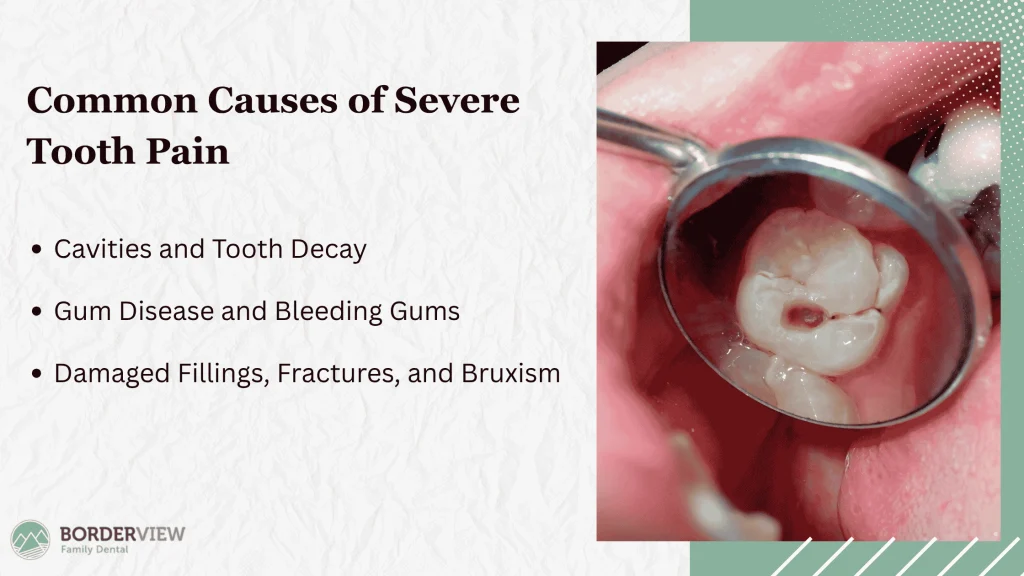
Cavities and Tooth Decay
When bacteria in your mouth feed on sugars and starches, they create acid that eats away at your tooth enamel. This process leads to cavities, which are the most common reason you might feel tooth pain.
As the decay gets deeper, it reaches the sensitive inner layers of your tooth. You’ll notice sharp pain when you eat or drink something sweet, hot, or cold.
If you ignore a cavity, it won’t heal on its own. The decay keeps spreading until it reaches the nerve inside your tooth. At that point, you might need a root canal or even lose the tooth entirely.
Gum Disease and Bleeding Gums
Your gums can become infected when plaque builds up along your gum line. Gum disease starts with swelling and bleeding, especially when you brush or floss.
As the infection gets worse, your gums pull away from your teeth and create pockets where more bacteria can grow. This causes pain, bad breath, and can even make your teeth feel loose.
Advanced gum disease damages the bone that holds your teeth in place. You might feel a dull ache or throbbing pain that doesn’t go away with regular pain medicine.
Damaged Fillings, Fractures, and Bruxism
A loose filling or cracked tooth exposes the sensitive parts of your tooth to temperature changes and bacteria. You’ll feel sudden, sharp pain when you bite down or chew on that side of your mouth.
Teeth grinding (bruxism) often happens while you sleep, so you might not even know you’re doing it. This habit wears down your enamel and can crack your teeth over time.
The constant pressure from bruxism causes jaw pain, headaches, and makes your teeth sensitive. You might wake up with sore jaw muscles or notice your teeth look shorter than they used to be.
Urgency of Professional Care and Early Intervention
Getting dental care quickly can stop a small problem from turning into a major issue that needs expensive treatment. Taking action at the first sign of trouble protects your teeth and saves you from pain down the road.
Why Early Diagnosis Matters
Visiting your dentist early helps catch problems while they’re still small and easy to fix. A toothache that seems minor today could be a warning sign of decay, infection, or gum disease.
When you schedule a dental check-up right away, your dentist can identify the exact cause of your pain. They use X-rays and exams to spot issues you can’t see on your own. Early detection means simpler treatments that cost less and take less time.
Waiting too long lets the problem spread. What starts as a cavity can reach the tooth’s nerve and require more complex procedures. An infection can move to nearby teeth or even into your jawbone.
Treatments: From Fillings to Root Canal Therapy
Your treatment depends on how far the problem has progressed. Simple cavities need just a filling, which your dentist can complete in one visit. They remove the decay and fill the space with a durable material.
Deeper decay may require root canal therapy to save your tooth. During a root canal, your dentist removes infected tissue from inside the tooth and seals it. This procedure stops the infection and relieves your pain.
More severe cases might need a tooth crown in Blaine, WA to protect a weakened tooth. In the worst situations, extraction becomes necessary if the tooth can’t be saved.
Prevention Through Oral Hygiene and Regular Dental Check-Ups

Good oral hygiene keeps many dental problems from starting. Brush your teeth twice daily with fluoride toothpaste and floss once a day to remove plaque between teeth.
Schedule regular dental check-ups every six months. These visits let your dentist clean your teeth professionally and spot early warning signs before you feel pain.
Key prevention habits include:
- Brushing for two minutes each time
- Using proper flossing technique
- Limiting sugary foods and drinks
- Drinking water throughout the day
- Replacing your toothbrush every three months
Taking care of your oral health daily reduces your risk of toothaches and serious dental issues. Regular visits help maintain your teeth for life.
Frequently Asked Questions
Tooth pain raises many questions about when to seek care and what your symptoms might mean. Understanding the difference between mild discomfort and serious dental problems helps you make the right decision for your health.
When is a toothache serious enough to see a dentist right away?
You should see a dentist immediately if your tooth pain is severe and doesn’t respond to over-the-counter pain medication.
Persistent throbbing pain that continues throughout the day means something more serious is happening inside your tooth.
Sharp pain when you bite down or chew is another sign you need prompt care. This type of pain often indicates a cracked tooth or infection at the root.
If your pain keeps you awake at night or stops you from eating normally, don’t wait. These changes in your daily routine signal that your body needs professional help.
What symptoms along with a toothache could signal an infection?
A bad taste in your mouth that won’t go away even after brushing can mean you have an infection. This metallic or foul taste comes from bacteria producing toxins in your tooth.
Swelling in your gums, face, or jaw points to an infection spreading beyond the tooth itself. You might notice one side of your face looks different than the other.
Fever combined with tooth pain is a serious warning sign that requires immediate attention. This tells you the infection is affecting your whole body, not just your mouth.
How can I tell if my toothache might be caused by an abscess?
An abscess often causes a visible bump or swelling on your gum near the painful tooth. The area might feel tender when you touch it.
You’ll typically experience severe pain that feels like your heartbeat is pulsing in your tooth. This throbbing sensation gets worse when you lie down or bend over.
A constant bad taste or smell in your mouth often accompanies an abscess. You might also see pus or notice your gums are red and swollen around the affected tooth.
What does it mean if my tooth pain comes and goes or gets worse at night?
Pain that comes and goes can indicate early decay or a developing infection. The tooth might hurt when you eat or drink something sweet, hot, or cold, then feel better afterward.
Tooth pain that worsens at night happens because blood flow to your head increases when you lie down. This creates more pressure in infected or inflamed tissues inside your tooth.
If pain consistently wakes you up at night, your tooth problem is serious enough to need professional treatment. Don’t assume it will get better on its own.
Is it normal to have a fever or facial swelling with a toothache?
No, fever and facial swelling are never normal with a toothache. These symptoms mean you have an infection that’s spreading through your body.
Facial swelling can start as a small bump but quickly spread to your cheek, jaw, or neck. Any visible swelling around a tooth requires immediate dental care.
Difficulty swallowing or opening your mouth along with tooth pain is a medical emergency. This means the infection is affecting your muscles and could threaten your airway.
What can I do at home to relieve tooth pain safely until my appointment?
Over-the-counter pain medications like ibuprofen work well for dental pain because they reduce inflammation. Take them according to the package directions.
Never place aspirin directly on your gums, as this can cause chemical burns. Swallow the medication with water instead.
A cold compress on the outside of your cheek can help reduce swelling and numb the pain. Avoid very hot or cold foods and drinks if you’re experiencing sensitivity, and try to chew on the opposite side of your mouth.