

You want a brighter, straighter, more balanced smile, but you also want it done the right way.
A complete smile makeover treatment plan helps you combine whitening, crowns, and aligners in a clear, organized plan that protects your teeth and improves how they look and function.
You get the best results when you brighten your teeth, improve alignment, and restore shape in a careful order that supports long-term health.
Whitening sets the color you want. Aligners move teeth into better position.
Crowns and other restorations refine shape and strength once everything lines up correctly.
When you follow a smart plan, you avoid mismatched shades, uneven spacing, and unnecessary dental work. You also create a smile that feels comfortable and works well every day, not just one that looks good in photos.
Key Takeaways
- Plan your treatments in the right order to improve both appearance and function.
- Set your tooth color and alignment before placing crowns or other restorations.
- Protect your results with good care and regular dental visits.
What Is Smile Makeover Planning?
Smile makeover planning maps out how whitening, crowns, and aligners will work together in the right order. You focus on both appearance and function, so your teeth look better and work well when you bite and chew.
Defining a Smile Makeover
A smile makeover is a custom plan that improves how your teeth look and function. In cosmetic dentistry, you combine treatments instead of fixing one issue at a time.
You might hear terms like full smile makeover or comprehensive smile makeover. Both mean your dentist reviews your teeth, gums, bite, and facial features before choosing cosmetic dental procedures.
A makeover can include whitening, clear aligners, crowns, veneers, bonding, or gum shaping. The key is planning the sequence.
For example, many dentists explain that a smile makeover combines different treatments like whitening, veneers, or implants, rather than using a single fix.
You do not start with random treatments. You build a step‑by‑step plan based on your goals, dental health, and budget.
Common Smile Concerns Addressed
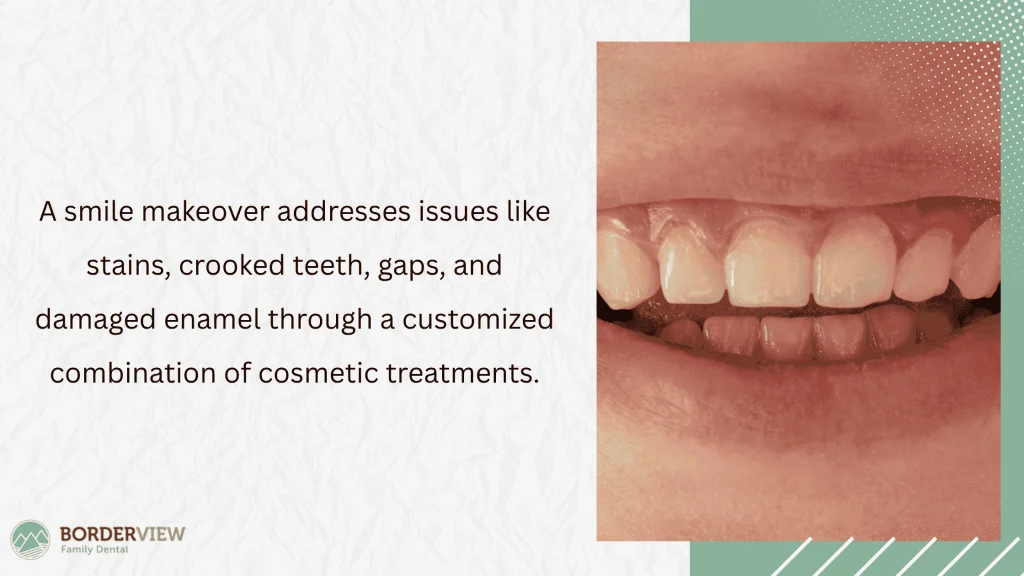
You may want a smile transformation because of stains, crooked teeth, gaps, worn edges, or old dental work. A smile makeover targets these issues in one structured plan.
Common concerns include:
- Yellow or stained teeth
- Crowded or misaligned teeth
- Chipped or cracked enamel
- Uneven tooth size or shape
- Old crowns or fillings that do not match
Cosmetic dental treatments often work best when combined. For example, teeth straightening may reduce the need for multiple crowns. Whitening often sets the base color before placing new restorations.
Many dentists note that smile makeovers fix crooked teeth, stains, gaps, and damaged enamel. When you address these problems together, you avoid patchwork results.
Benefits of Combining Cosmetic Treatments
When you combine cosmetic dental procedures, you create balance. Each step supports the next one.
For example:
| Treatment | Why Timing Matters |
| Whitening | Sets the final tooth shade before crowns or veneers |
| Aligners | Move teeth into place before reshaping or restoring them |
| Crowns | Protect weak teeth after alignment and color changes |
Planning also helps you avoid redoing work. If you whiten after placing crowns, the color may not match. If you place crowns before straightening, you may need to replace them later.
Many practices explain that a smile makeover is fully customized and may combine veneers, whitening, bonding, aligners, and crowns. When you follow a clear plan, your results look natural and last longer.
You stay in control because you understand each step, the timeline, and how every treatment supports your final smile.
Essential Steps in the Smile Makeover Process
You need a clear plan before you combine whitening, crowns, and aligners. Careful evaluation, digital smile design, and proper sequencing help you avoid redoing work and protect your long‑term results.
Smile Design Consultation and Assessment
Your smile design consultation sets the direction for your entire treatment. During this visit, your cosmetic dentist studies your teeth, gums, bite, and facial features.
You talk about what you want to change, such as stains, worn edges, or crowding.
The dentist takes photos, X-rays, and sometimes digital scans. These records show how your teeth fit together and where problems may exist. Gum health, old fillings, and bite pressure all matter.
You then review options and build a customized treatment plan (or customised treatment plan). This plan outlines which procedures you need, the order of care, estimated timing, and expected costs.
Clear planning at this stage prevents surprises later.
Digital Smile Design and Mock-Ups
Digital smile design lets you preview changes before treatment begins. Your dentist uses software to adjust tooth length, width, and shape on a photo of your face. This process supports precise smile design based on your features.
You can see how whiter teeth, straighter alignment, or longer edges may look. This helps you give clear feedback. Small changes on a screen can prevent major changes in the chair.
In some cases, your dentist creates a mock-up. A mock-up places temporary material over your teeth so you can test the new shape in real life. You can speak, smile, and check comfort.
If crowns or veneers are part of your plan, you may also wear temporaries. These short-term restorations protect prepared teeth and let you confirm shape and color before final placement.
Sequencing Treatments for Best Results
The order of treatment matters more than many people realize. A well-built plan prevents wasted time and extra cost.
Many cosmetic dentists follow this basic sequence:
- Health first – treat gum disease, cavities, or failing dental work.
- Alignment next – use aligners if crowding or spacing affects the final result.
- Whitening before restorations – brighten natural teeth first so crowns match the lighter shade.
- Final restorations last – place crowns, veneers, or bonding once alignment and color are stable.
Whitening often comes before bonding or veneers so the final shade blends properly. This layered approach reflects how experts explain a step-by-step smile makeover plan.
When you follow the right sequence, your customized treatment plan works smoothly. You protect your investment and achieve results that look natural and feel comfortable.
Professional Teeth Whitening as the First Step
You get the best smile makeover results when you start by brightening your natural teeth. Whitening first sets a clear shade target for crowns and helps you plan aligners with your final tooth colour in mind.
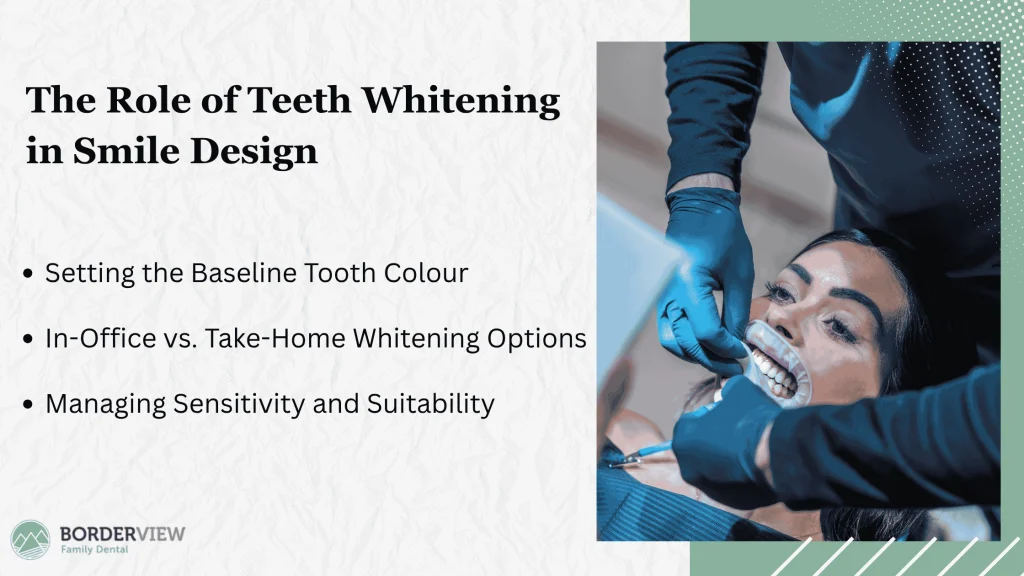
Setting the Baseline Tooth Colour
Before you place crowns or start aligners, you need to know your true tooth colour. Professional teeth whitening removes surface stains and lightens many deeper stains, so you see what your natural teeth can look like at their best.
Your dentist will record your starting shade with a shade guide. This creates a clear baseline. After whitening, they measure the new shade and use it to match crowns or veneers.
If you skip this step, you may match crowns to discolored teeth. Later whitening will not change the colour of crowns. That can leave you with uneven results.
Whitening first also helps you decide how bright you want to go. Some people prefer a natural white. Others want a lighter cosmetic shade. Setting this goal early keeps the whole plan consistent.
In-Office vs. Take-Home Whitening Options
You can choose between in-office professional whitening and custom take-home trays. Both can work well, but they fit different needs.
In-office treatment uses stronger whitening gel and careful gum protection. You usually see results in one visit. Many dental offices describe the steps clearly in guides like this overview of the professional teeth whitening process.
Take-home trays use custom-fitted trays and a lower-strength gel. You wear them daily for one to two weeks. This option gives you more control over the pace of whitening.
Your choice depends on:
- Time frame before crowns or aligners
- Level of staining on your teeth
- Budget and convenience
If you are on a tight schedule, in-office whitening often works best before moving to the next step.
Managing Sensitivity and Suitability
Not every case of discolored teeth responds the same way to whitening. Stains from coffee or wine usually lighten well. Stains from certain medications or internal tooth changes may not.
Your dentist checks your enamel condition and gum health first. You should treat cavities, gum disease, or worn enamel before whitening. Healthy enamel gives you safer and more even results.
Some sensitivity during or after teeth whitening is normal. You can lower this risk by:
- Using toothpaste for sensitive teeth one to two weeks before treatment
- Following your dentist’s timing instructions exactly
- Avoiding very hot or cold drinks for a few days
A clear exam and honest talk about your enamel condition help you decide if professional teeth whitening is the right first move in your smile makeover plan.
Aligners and Orthodontic Treatments for Alignment
Straight teeth create a stable base for whitening and crowns. You need proper alignment before cosmetic work so your dentist can shape and place restorations with precision.
Clear Aligners vs. Traditional Braces
You can choose between clear aligners and traditional braces for most orthodontic treatments. Both move teeth by applying steady pressure over time, but they differ in comfort, look, and lifestyle impact.
Clear aligners, including systems like Invisalign, use a series of removable trays. You wear them about 20–22 hours a day and switch to a new set every one to two weeks.
Many adults prefer aligners because they are nearly invisible and easy to remove for meals and brushing.
Braces use metal or ceramic brackets fixed to your teeth. They work well for complex cases, such as severe crowding or major bite problems. You cannot remove them, which means fewer compliance issues but more care with cleaning.
If you want a discreet option for mild to moderate problems, you may look into Invisalign as a first step in a smile makeover. Your orthodontist will review your bite, jaw position, and goals before recommending one approach.
Treating Minor Alignment Issues
You may not need full braces if you have minor alignment issues. Small gaps, mild crowding, or slight tooth rotation often respond well to clear aligners.
Aligners work best when your bite is mostly healthy. They can close small spaces and straighten front teeth in a shorter time than complex orthodontic cases.
Some at-home systems claim faster treatment times, but you should confirm that your case qualifies for remote care.
Many adults explore options like at-home teeth aligners for mild crowding. Still, an in-person exam gives you a full view of gum health, bone support, and hidden decay before you begin.
Correcting alignment first allows your dentist to place crowns or veneers more evenly. Straight teeth also spread bite forces more evenly, which protects future restorations.
The Role of Retainers and Maintenance
You must wear retainers after any orthodontic treatment. Teeth naturally shift back without support, even after months of aligner or braces therapy.
Your orthodontist may give you a clear removable retainer or a fixed wire retainer bonded behind your teeth. Removable retainers require daily wear at first, then nighttime wear long term. Fixed retainers stay in place but need careful flossing.
Good maintenance also includes:
- Brushing and flossing daily
- Professional cleanings every six months
- Avoiding habits that strain teeth, like nail biting
When you protect your results with retainers and routine care, your whitening and crowns stay aligned with your new bite.
Restoring and Refining with Crowns, Veneers, and Bonding
After you align and whiten your teeth, you refine their shape, strength, and balance. Crowns, veneers, bonding, and gum contouring help you create a smile that looks even and feels strong when you chew.
When to Use Dental Crowns

You choose a dental crown when a tooth needs full coverage and strength, not just a surface fix. Crowns work best for teeth with large fillings, deep cracks, heavy wear, or root canal treatment.
Unlike veneers or bonding, porcelain dental crowns cover the entire tooth. Your dentist reshapes the tooth, removes decay, and places a custom cap that restores both function and appearance.
This makes crowns ideal for back teeth that handle strong biting forces.
Crowns also help when a tooth looks dark or misshapen and cannot improve with whitening alone. Many smile makeover plans include crowns to strengthen weakened or heavily filled teeth so your new smile stays stable long term.
You can choose materials that match your natural color. Modern crowns blend with nearby teeth while protecting your bite.
Dental Veneers and Customization
Dental veneers improve the front of your smile by changing color, size, and tooth shape. You often use them for stains that whitening cannot lift, small gaps, or uneven edges.
Porcelain veneers resist stains and reflect light in a natural way. Your dentist removes a thin layer of enamel, then bonds a custom shell to the front of your tooth.
You can design custom veneers to adjust length, close minor spaces, or correct slight rotation. If you compare your options, guides like veneers vs crowns vs bonding explain how each treatment fits different goals.
Veneers focus on visible areas. They do not replace missing teeth or fix serious bite issues, so you often combine them with aligners or crowns for full results.
Composite Bonding for Final Touches
Composite bonding gives you a simple way to refine small flaws. Your dentist applies tooth-colored resin, shapes it, and hardens it with a special light.
Bonding works well for:
- Small chips
- Minor gaps
- Slightly uneven tooth shape
- Edges worn by grinding
You can often complete bonding in one visit. It costs less than porcelain veneers and keeps more natural enamel.
Bonding does not last as long as crowns or veneers, especially on biting edges. Still, it plays a key role in smile makeovers that combine treatments, such as dental crowns and bridges, dental bonding, and gum contouring for a balanced result.
Gum Contouring and Cosmetic Refinement
Your teeth may look short or uneven because of excess gum tissue. Gum contouring reshapes the gumline so your teeth appear longer and more even.
Your dentist may use a scalpel or laser gum contouring. Lasers often reduce bleeding and speed healing. This treatment helps when one tooth looks smaller than the one next to it, even if both are healthy.
You can also combine gum contouring with cosmetic contouring of enamel. Small adjustments to tooth shape create better symmetry after veneers or bonding.
By refining both teeth and gums, you improve how your smile frames your face. You also make sure your final results look planned, not patched together.
Maintaining Your New Smile for the Long Term
Your results will last longer when you protect your gums, keep up strong oral hygiene, and stay consistent with professional care. Small daily habits and regular dental visits play a direct role in your long-term oral health.
Ensuring Gum and Oral Health
Healthy gums support every part of your smile makeover. Veneers, crowns, and aligner results depend on stable gum tissue and bone.
If plaque builds up along the gumline, you can develop inflammation or gum disease. This can lead to gum recession, which may expose crown margins or veneer edges. That affects both appearance and comfort.
Protect your gum health by watching for:
- Red or swollen gums
- Bleeding when brushing or flossing
- Persistent bad breath
- Gum tenderness
If you notice these signs, schedule a dental visit right away. Early treatment helps prevent damage to restorations and supports long-term oral health.
If you have crowns or implants, your dentist may suggest more frequent cleanings. Consistent maintenance keeps the foundation of your smile strong.
Daily Oral Hygiene Habits
Daily oral hygiene directly affects how long whitening, crowns, and aligner results last. You should brush twice a day with a soft-bristled toothbrush and fluoride toothpaste.
Electric toothbrushes often remove plaque more effectively around crowns and along the gumline. Use gentle pressure to avoid wearing down enamel or irritating your gums.
Floss every day. If you have bridges or implants, consider:
- Interdental brushes
- Floss threaders
- A water flosser
Avoid abrasive toothpaste, which can scratch porcelain or composite surfaces. If you recently completed cosmetic work, review detailed smile makeover aftercare steps to match your routine to your treatment.
Limit dark drinks like coffee and red wine if you want to maintain whitening results. Rinse with water after consuming staining foods.
Night Guards, Dental Check-Ups, and Ongoing Care
Grinding or clenching your teeth can damage crowns, veneers, and even natural enamel. If you grind at night, wear a custom night guard to reduce pressure on your restorations.
A night guard protects both your cosmetic work and your jaw joints. This simple step can prevent cracks, chips, and uneven wear.
Schedule dental check-ups every six months, or more often if your dentist recommends it. Regular visits allow your dentist to:
- Check crown margins
- Monitor gum health
- Polish surface stains
- Adjust retainers or aligners
Professional cleanings remove hardened plaque that brushing cannot reach.
Ongoing care is not complicated, but it must stay consistent. When you protect your gums, follow strong oral hygiene habits, and keep up with maintenance visits, you support the long-term success of your smile makeover.
Frequently Asked Questions
You need a clear order, realistic timing, and good daily care to get the best result. Each step builds on the one before it, so planning matters.
What’s the recommended order of cosmetic dental procedures for a smile makeover?
Most dentists start with whitening, then move to aligners, and finish with crowns or veneers. Whitening first sets the color of your natural teeth.
Aligners come next because straight teeth often reduce how much enamel your dentist must remove for crowns or veneers. Better positioning also improves your bite.
Your dentist then places crowns, veneers, or bonding to refine shape and size.
How long should you wait to get crowns after teeth whitening?
You should usually wait about two weeks after whitening before placing permanent crowns. This gives the tooth color time to stabilize.
Bonding strength can also improve after this short delay. Your dentist will match the crown shade to your final, settled tooth color.
If you rush this step, your crowns may look darker than your natural teeth later.
Are there any compatibility issues between teeth aligners and crowns?
Clear aligners can work well with existing crowns. The plastic trays fit over both natural teeth and crowns.
However, crowns do not move like natural enamel. Your dentist will plan movements carefully to avoid stress on the crown margins.
If you need new crowns, many dentists wait until after aligner treatment.
Can veneers be a part of a smile makeover that includes whitening and aligners?
Yes, veneers often come at the end of treatment. You whiten and straighten first, then use veneers to correct shape, size, or deep stains.
This order allows for thinner veneers in many cases. Straight teeth need less reshaping.
How do you maintain oral hygiene during a multi-step smile makeover process?
Brush twice a day with a soft toothbrush and fluoride toothpaste. Clean along the gumline with care, especially if you wear aligners.
Remove aligners before eating and brush before putting them back in. This helps prevent stains and decay.
If you have temporary crowns or veneers, avoid sticky foods and floss gently around the edges. Keep all follow-up visits so your dentist can check fit and gum health.
What factors determine the timeline for a complete smile makeover?
The timeline depends on how much tooth movement you need, how many teeth require crowns or veneers, and whether your gums need treatment.
Simple whitening may take a few weeks. Clear aligners can take several months, and more complex cases may last longer.
Some smile makeovers finish in weeks, while others take many months, depending on the procedures involved.