


If you’re thinking about straightening your teeth without metal braces, you’ve probably heard of both Spark and Invisalign.
These are two popular brands of clear aligners that help move your teeth into better positions while staying almost invisible. But what makes them different from each other?
Both Spark vs Invisalign are effective clear aligner systems, but they differ in their materials, comfort features, and where you can get them.
Spark aligners use TruGEN material that resists stains better and stays clearer throughout your treatment, while Invisalign uses SmartTrack material and has been around longer, with millions of patients treated.
Understanding these differences can help you pick the right option for your smile.
Whether you care most about how clear your aligners look, how they feel in your mouth, or where you can get treatment, this guide breaks down everything you need to know.
Let’s look at how these two systems compare so you can make the best choice for your teeth.
Key Takeaways
- Spark aligners use TruGEN material that stays clearer and resists stains better than most other aligners
- Both systems work well for straightening teeth, but Spark is usually offered by orthodontists, while Invisalign is available at more dental offices
- Your final choice should be based on your personal needs, budget, and which provider you trust to guide your treatment
What Are Spark Clear Aligners and Invisalign?
Both Spark and Invisalign are premium clear aligner systems that straighten your teeth without metal braces. These orthodontic treatment options use custom-made plastic trays that fit over your teeth and gradually shift them into place.
Overview of Clear Aligner Systems
Clear aligners are removable plastic trays that work as an alternative to traditional metal braces. You wear each set of aligners for about one to two weeks before switching to the next set in your treatment series.
Clear aligner systems have changed how people straighten their teeth by offering a discreet option. The trays are nearly invisible when you wear them. You can take them out to eat, brush your teeth, and floss.
Your orthodontist creates a treatment plan using 3D imaging technology. This plan shows how your teeth will move from start to finish.
Each aligner in your series applies gentle pressure to specific teeth to move them closer to their final position.
Brand Backgrounds and History
Invisalign launched in 1999 and became the first major clear aligner brand. The company has treated over 14 million patients worldwide and remains the most recognized name in clear aligners.
Spark Clear Aligners entered the market much more recently as a newer competitor. The brand was developed by Ormco, a company with decades of experience in orthodontic products.
Spark’s TruGEN material offers superior clarity compared to other clear aligner options.
Invisalign uses SmartTrack material for its clear aligners. Both brands require supervision from a licensed orthodontist or dentist throughout your treatment. This ensures your teeth move safely and correctly.
Material and Design Differences
The materials used in Spark and Invisalign aligners directly affect how they look, feel, and perform during your treatment. Each brand uses its own proprietary plastic formulation with distinct advantages.
TruGEN vs. SmartTrack: Technology Explained
Spark clear aligners use TruGEN material, which is a clear polyurethane-based plastic designed specifically for orthodontic treatment. This material provides better surface contact with your teeth, which helps move them more effectively.
The TruGEN formula was developed to address common complaints about earlier clear aligner materials.
Invisalign relies on SmartTrack material, a medical-grade polyurethane resin that has been refined over more than 20 years of research.
The SmartTrack material applies gentle, constant pressure to your cile remaining flexible enough for comfortable wear. It’s engineered to deliver predictable tooth movement, especially in complex cases.
Both materials are safe for long-term wear in your mouth. The main difference is that TruGEN focuses on clarity and comfort, while SmartTrack prioritizes controlled force application for precise tooth movement.
Clarity and Appearance Factors
TruGEN material maintains exceptional transparency throughout your treatment, even after weeks of daily wear.
The aligners stay virtually invisible when you’re wearing them, which is important if you’re concerned about people noticing your orthodontic treatment.
Many users report that Spark aligners are harder to detect during conversations.
SmartTrack material is also clear, but it may not maintain the same level of transparency as TruGEN over extended wear. The difference is subtle and won’t be obvious to most people looking at you.
Both aligner types are far less noticeable than traditional metal braces.
Your aligners’ visibility also depends on how well you maintain them. Proper cleaning keeps both types looking their best.
Stain Resistance and Durability
The TruGEN material used in Spark aligners offers superior stain resistance compared to other clear aligner materials. You can drink coffee, tea, and other beverages without worrying as much about discoloration.
The aligners resist that yellowed, cloudy appearance that sometimes develops with prolonged use.
SmartTrack material is durable and maintains its shape well throughout your treatment, but it’s more prone to staining than TruGEN.
You’ll need to be more careful about removing your aligners before consuming colored drinks. Both materials are strong enough to withstand normal wear without cracking or breaking.
Each aligner is typically worn for one to two weeks before switching to the next set, so minor staining usually isn’t a major concern. You’ll replace them regularly throughout your treatment.
Comfort, Fit, and Attachments
Both aligner systems prioritize a snug fit against your teeth, but they differ in how the trays feel in your mouth and how attachments help with teeth straightening.

Wearing Experience and Edge Design
Spark aligners use a material called TruGEN that feels smoother and less bulky than traditional aligner plastics. The edges are trimmed to sit comfortably along your gum line without digging in or causing irritation.
Invisalign aligners are made from SmartTrack material, which also provides a close fit. However, some patients find the edges slightly thicker or more noticeable during the first few days of wearing each new tray.
Comfort features to consider:
- Edge smoothness – Spark’s polished edges reduce gum irritation
- Material flexibility – Both brands flex enough to remove easily but stay firm on your teeth
- Break-in period – You might need 1-2 days to adjust to each new set
The fit of your aligners affects how well they apply pressure to move your teeth. A tighter fit means better force retention, which helps your treatment stay on schedule.
Attachments: SmartForce and Other Innovations
Attachments are small tooth-colored bumps bonded to your teeth that help aligners grip better and move specific teeth more effectively. Invisalign uses
SmartForce attachments that come in different shapes depending on which tooth movements you need.
Spark aligners also use attachments, though the company doesn’t use a specific brand name for them. These bumps work the same way by giving your aligners anchor points to push or pull teeth into position.
Your orthodontist decides how many attachments you need based on your treatment plan. Simple cases might only need a few, while complex teeth straightening may require attachments on most of your teeth.
The good news is that attachments blend in with your tooth color and aren’t very noticeable when your aligners are out.
Treatment Planning and Effectiveness
Both Spark and Invisalign use advanced digital systems to map your treatment, but they differ in how orthodontists plan tooth movement and handle various case types.
Treatment speed and final results depend heavily on the complexity of your case and how well your provider plans each stage.
Digital Treatment Planning Tools
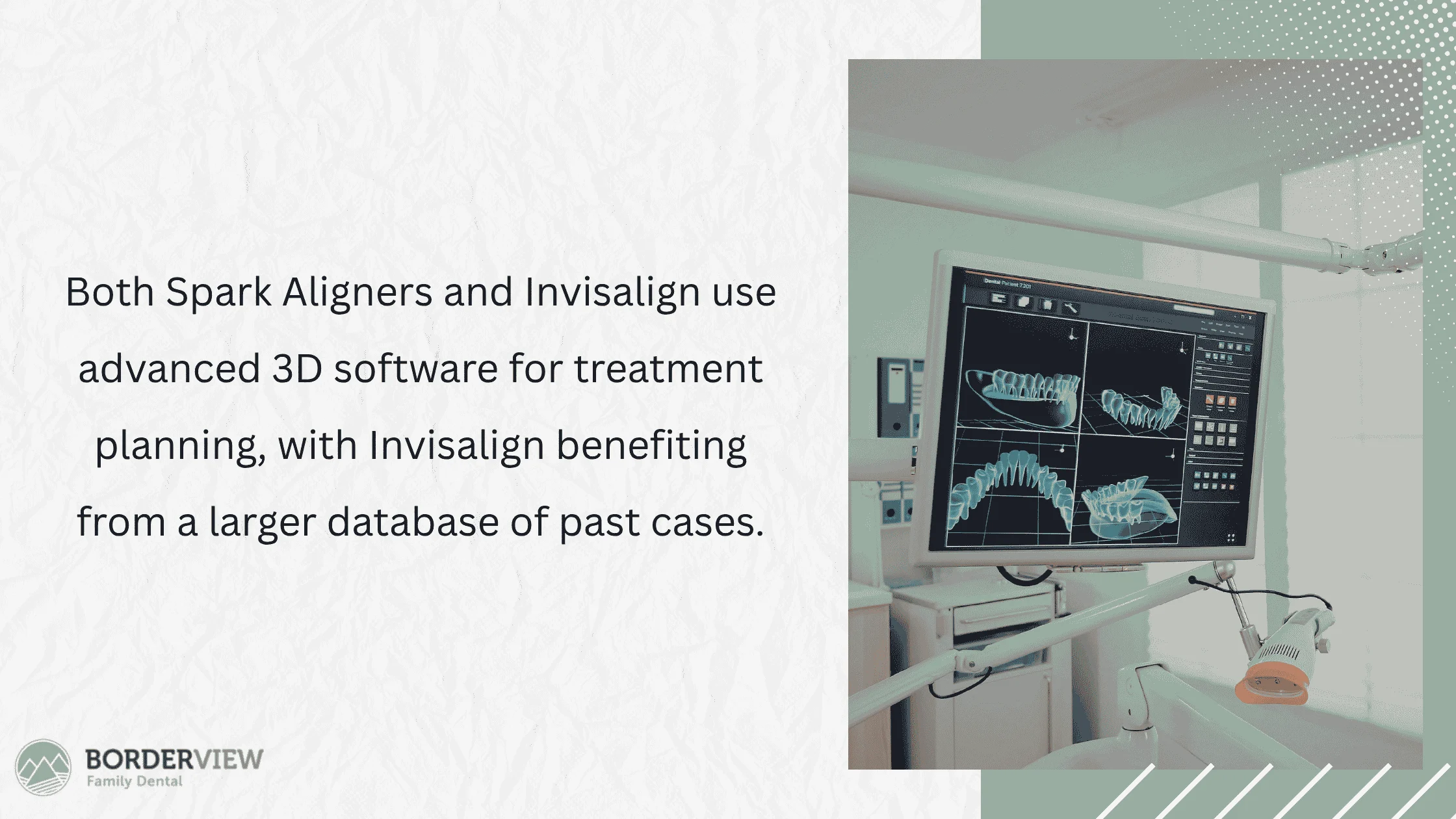
Spark Aligners use Approver software for digital treatment planning. This system lets your orthodontist design your entire treatment digitally and preview how your teeth will move at each stage.
The software shows a 3D model of your mouth and allows detailed adjustments before your aligners are made.
Invisalign uses ClinCheck software, which has been refined over more than 20 years. This program also creates a 3D treatment plan and predicts tooth movement throughout your care.
Both systems give orthodontists strong control over planning, but Invisalign’s software has more historical data from millions of past cases.
Your orthodontist can use either platform to plan effective teeth straightening. The main difference is in the interface and how long each company has been collecting treatment data.
Handling Complex and Mild Cases
Both aligner systems can handle difficult cases when overseen by an experienced orthodontist. Invisalign has treated over 14 million patients since 1999, giving it extensive experience with complex orthodontic problems.
This includes severe crowding, large gaps, and bite corrections.
Spark Aligners work well for mild to complex cases too. The TruGEN material gives precise control over tooth movement.
Spark is offered exclusively through orthodontists, which means you always work with a specialist trained in handling challenging treatments.
For very complicated corrections, your orthodontist might prefer one system over the other based on their experience and training. The success of clear aligner treatment depends more on your provider’s skill than the brand itself.
Expected Results and Treatment Speed
Treatment time typically ranges from 6 to 18 months for both systems. Your specific timeline depends on how much your teeth need to move and how well you follow instructions.
You must wear your aligners 20 to 22 hours per day for either option to work properly.
Both Spark and Invisalign deliver excellent results when you stick to your treatment plan. You’ll switch to new aligners every 1 to 2 weeks as your teeth gradually shift into place.
Your orthodontist will schedule check-ins every 6 to 8 weeks to monitor progress.
The final outcome depends on three factors: accurate treatment planning, consistent aligner wear, and proper follow-up care. Neither system works faster than the other in most cases.
Cost, Accessibility, and Provider Options
Both systems fall within similar price ranges, though Invisalign typically costs more due to its established network and brand recognition.
Your ability to access treatment depends on where you live and which orthodontists in your area offer each system.
Typical Costs and Insurance Considerations
Spark treatment usually ranges from $1,300 to $3,500 for the aligner hardware alone, while Invisalign’s full treatment commonly costs between $3,000 and $8,000.
The final price depends on your case complexity, the number of custom aligners you need, and how long your treatment takes.
Insurance coverage can reduce your out-of-pocket expenses by $1,000 to $3,000, depending on your plan and provider. Many orthodontic care plans treat both systems similarly since they’re both clear aligner treatments. You should check with your insurance company before starting treatment.
| Cost Component | Low | Average | High |
| Spark Aligners | $1,300 | $2,000 | $3,500 |
| Invisalign Treatment | $1,500 | $4,000 | $8,000 |
| Insurance Impact | $0 | $1,000 | $3,000 |
Payment plans and financing options are available through most providers, which can make either system more affordable for your budget.
Provider Networks and Availability
Invisalign has a much larger provider network since it launched in 1997 and has built relationships with orthodontists nationwide. You’ll find Invisalign providers in most cities and suburban areas across the country.
Spark Clear Aligners entered the market in 2017, so the availability is more limited. Your local orthodontist may only offer one system or the other, which could influence your choice.
Urban areas typically have more providers offering both options.
You should call orthodontic offices in your area to ask which system they use. Some practices offer both and can help you compare them during your consultation.
Choosing the Right Clear Aligner for You
Both systems work well for most people, but your specific eal needs and daily habits will help determine which option fits you best.
Who Is an Ideal Candidate?
You’re a good candidate for either Spark or Invisalign if you have mild to moderate orthodontic issues. Both clear aligners can fix spacing issues, crowded teeth, and bite problems.
Adults and teens who want a discreet treatment option benefit most from these systems. You need to be responsible enough to wear your aligners for 20 to 22 hours each day.
If you can’t commit to this wearing schedule, traditional braces might work better for you.
Both Spark vs Invisalign can treat:
- Gaps between teeth
- Crowded or overlapping teeth
- Overbites and underbites
- Crossbites
Your orthodontist will check your teeth and jaw alignment to confirm you’re a good fit.
Some complex cases still need traditional braces or other orthodontic treatment methods. Kids with baby teeth or growing jaws usually aren’t ready for clear aligners yet.
Lifestyle, Preferences, and Final Considerations
Your daily routine matters when picking between these two options. If you drink coffee or red wine often, Spark’s stain-resistant material might appeal to you more.
Think about where you live and work too. Invisalign is available at more dental offices, which makes it easier to find a provider near you. Spark is typically offered by specialized orthodontists.
Consider these lifestyle factors:
- How often you eat or drink throughout the day
- Your budget for orthodontic treatment
- Whether you travel frequently for work
- How important complete invisibility is to you
Your personal comfort also plays a role. Some people find Spark’s scalloped edges feel better against their gums. Others prefer Invisalign’s established track record.
Schedule consultations with orthodontists who offer both systems to compare how each aligner feels in your mouth.
Frequently Asked Questions
Both aligner systems offer effective teeth straightening, but they differ in provider availability, materials used, and treatment flexibility.
Cost ranges are similar for both options, though specific pricing depends on your individual case complexity.
What are the main differences in treatment process between Spark Aligners and Invisalign?
The biggest difference is who can provide your treatment. Spark aligners are only available through orthodontists, while you can get Invisalign from both orthodontists and general dentists.
This means you’ll have more options when looking for an Invisalign provider.
Both treatments start with digital scans and custom treatment planning. You’ll wear your aligners for 22 hours each day and switch to new sets regularly.
Spark uses TruGEN material for the aligners, while Invisalign uses their SmartTrack material. Both materials are designed to move your teeth effectively, but they have different properties for comfort and clarity.
How do the costs of Spark Clear Aligners compare with those of Invisalign?
Spark aligners typically cost between $3,500 and $8,000 for complete treatment. Invisalign falls into a similar price range. Your final cost depends on how complex your case is and how long treatment takes.
Neither option is necessarily cheaper than the other. The price you pay will depend more on your specific orthodontic needs than on which brand you choose.
Many orthodontists offer payment plans for both options. Check with your dental insurance to see if they cover clear aligners, as some plans provide partial coverage.
Can users share their personal experiences and outcomes with Spark Aligners versus Invisalign?
Both systems have successfully treated millions of patients. Invisalign has been around since 1997 and has treated approximately 16 million patients worldwide. Spark is newer, launching in 2017, but has quickly gained users.
Patient satisfaction with both brands tends to be high. Many people report that Spark aligners have smoother edges than other brands, which can mean less irritation to your gums and cheeks.
Your individual results will depend on following your treatment plan carefully. Wearing your aligners for the required 22 hours daily is key to success with either brand.
What are the pros and cons of choosing Spark Aligners over traditional braces?
Spark aligners are nearly invisible, so most people won’t notice you’re wearing them. Traditional braces with metal brackets and wires are much more noticeable. You can remove Spark aligners to eat, brush, and floss, making oral hygiene easier than with fixed braces.
The aligners are more comfortable than metal braces because they don’t have brackets that can irritate your mouth. Spark aligners also resist staining better than some other clear aligner brands, so they stay clearer throughout treatment.
However, Spark aligners require discipline since you must wear them 22 hours daily. Traditional braces work continuously since you can’t remove them.
Spark aligners may not work for extremely severe orthodontic cases that need significant jaw realignment.
What should one expect in terms of results when choosing between Spark Aligners and Invisalign?
Both systems can effectively treat a wide range of orthodontic issues. These include crowding, spacing, overbites, underbites, crossbites, and open bites.
Your results depend more on your specific case and following your treatment plan than on which brand you choose.
Invisalign offers treatment options for children as young as 6-10 years old through their Invisalign First program. Spark aligners require that you have all your permanent teeth, including second molars, so they’re better suited for teens and adults.
Treatment time varies based on your individual needs. Both systems offer different packages ranging from minor corrections with fewer aligners to comprehensive treatment for complex cases.
Are there any reasons why someone might discontinue Invisalign treatment in favor of Spark Aligners?
Some people switch if they prefer the specialized care that comes with orthodontist-only treatment. Since Spark is exclusively provided through orthodontists, you’re guaranteed specialist oversight throughout your treatment.
Others might switch because of material preferences. Spark’s TruGEN material is designed to be more stain-resistant and may offer different comfort characteristics than Invisalign’s SmartTrack material.
Your orthodontist can evaluate whether switching makes sense for your specific situation. Keep in mind that starting a new treatment plan may require additional scans and could extend your overall treatment time.