

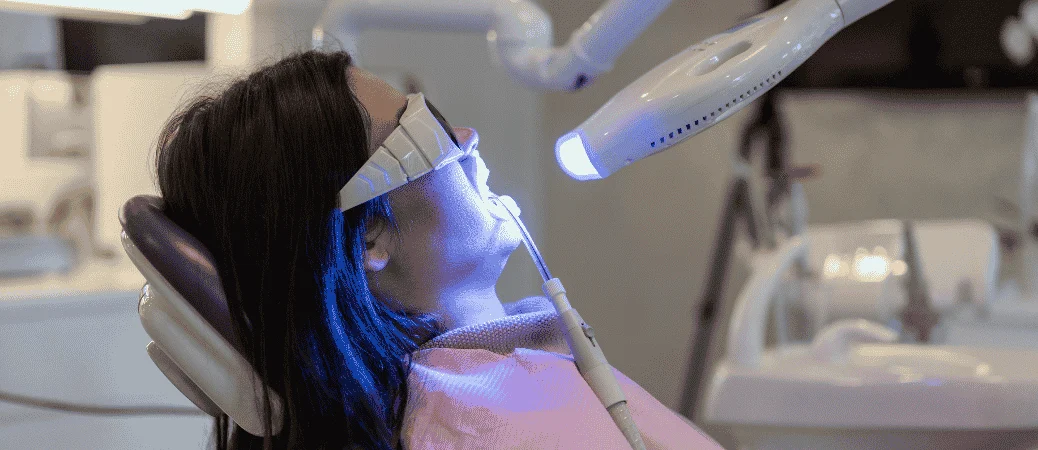
Zoom whitening for fluorosis stains may help lighten certain brown spots and reduce the contrast between white patches and surrounding enamel.
However, the results depend on the severity of fluorosis, and whitening cannot repair pitted or structurally damaged enamel.
Whether you see a modest change or a big one depends on the color of your spots, how deep they sit, and the condition of the enamel around them.
Dental fluorosis forms while your teeth are still developing in childhood, so the marks are built into the tooth itself.
That is why brushing and whitening strips leave them unchanged, and why professional bleaching behaves differently on these spots than it does on coffee or tea stains.
If you are weighing Zoom teeth whitening for uneven tooth discoloration, knowing what each type of spot will likely do helps you set fair goals before you book. Uneven tooth color is common, and choosing to treat it, or to leave it alone, is your call.
Key Takeaways
- Brown fluorosis stains respond to whitening more readily than white patches.
- Whitening changes color but never rebuilds pitted or uneven enamel.
- A dental exam shows whether whitening alone, a gentle add-on, or a covering option suits your teeth.
What Results Can You Expect From Zoom Whitening?
Expect a brighter overall shade and, for many people, a softer look to fluorosis marks, with results that vary by spot type.
Professional teeth whitening lightens the healthy enamel around fluorosis staining, while severe dental fluorosis with pits or rough patches usually needs more than bleaching.
Can White Patches Blend With the Surrounding Enamel?
White spots on teeth from fluorosis are chalky areas where the enamel has less mineral than normal. Bleaching does not turn these spots back to normal enamel.
What it does is lighten the tooth around them, so the gap in color between the patch and its background gets smaller.
For mild, faint flecks, that smaller gap may be enough to make the marks hard to notice in daily life. For bright, sharply bordered patches, the spots often stay visible after treatment.
A tip from the chair: right after a session, white patches can look stronger. Teeth lose some water during bleaching, and dry enamel looks chalkier.
This effect fades as your teeth rehydrate over the next day or two, so judge your final result after about two weeks.
Can Brown Fluorosis Stains Become Lighter?
Some brown fluorosis stains may lighten with professional bleaching, while white patches may remain visible or become less noticeable as the surrounding enamel brightens.
The response varies with stain depth, enamel structure, and severity, so results cannot be predicted from color alone.
Light brown areas may fade a good deal. Dark brown stains in moderate or severe cases may lighten only partway, and you may need more than one session or a take-home tray to get closer to your goal.
At Borderview Family Dental, the most useful step before whitening brown spots is a clear conversation about how light they are likely to get, since some deep stains lighten to tan without vanishing.
Many patients find the ways Zoom whitening can improve your smile still worthwhile even when fluorosis marks remain partly visible.
Why Whitening Cannot Repair Pitting or Uneven Enamel
Pits, grooves, and rough surfaces are physical shape changes in the enamel. Whitening gel changes the color of tooth structure; it adds nothing and smooths nothing.
In severe fluorosis, there are light brown, or dark brown spots on all surfaces, sometimes with pitting, or small depressions in the enamel.
Those dents catch light and shadow no matter how white the tooth gets. Covering or reshaping options handle that part of the problem.
Why Does Fluorosis Respond Differently From Surface Stains?
Fluorosis sits inside your enamel, while everyday stains sit on top of it or in its outer layer. That location changes how bleaching works on each one, and light activation does not move fluorosis into a different category.

How Childhood Fluoride Exposure Changes Tooth Enamel
Fluoride helps prevent cavities, and normal amounts are safe. Problems start only when a young child takes in too much fluoride exposure while the permanent teeth are forming under the gums, roughly from birth to age 8.
During childhood tooth development, extra fluoride disturbs the cells that build tooth enamel. The result is hypocalcification of tooth enamel, meaning the enamel holds less mineral than it should.
This porous enamel scatters light, which is why enamel fluorosis looks white or opaque. In some cases, the porous areas later pick up brown color.
Because the change happened as the tooth was built, it is permanent. Brushing harder or switching toothpaste will not remove it.
How Peroxide Lightens Color Without Rebuilding Enamel
Tooth whitening relies on hydrogen peroxide or carbamide peroxide. Carbamide peroxide breaks down into hydrogen peroxide, which spreads through tiny spaces in the enamel.
It reacts with colored compounds inside the tooth and breaks them into smaller, lighter ones.
That reaction explains the difference between spot types:
- Brown fluorosis stains contain pigment, so dental bleaching has something to break down.
- White fluorosis patches have little pigment. Their color comes from how porous enamel bends light, so bleaching mostly lightens the tooth around them.
- Pits and rough areas are missing or irregular tooth structure, which peroxide cannot replace.
Does Zoom’s Light Activation Change Those Limitations?
Zoom is an in-office system that pairs a hydrogen peroxide gel with a blue light. The exact gel strength and steps vary by system version, so ask your dentist which Zoom product and protocol they use.
The light is meant to speed up whitening. It does not target fluorosis or restore mineral to weak enamel. Think of it as a tool for the bleaching step itself: it works on the same pigments any peroxide gel reaches, and the limits for white patches and pitting stay the same.
What Should a Dentist Check Before Whitening?
A dentist should confirm what is causing your spots, how deep they go, and whether your enamel and gums are healthy enough for bleaching.
The ADA recommends a clinical exam before bleaching to diagnose what is behind your discoloration.
Are the White Spots Fluorosis or Enamel Demineralization?
Not every white spot is fluorosis. White spot lesions also form when plaque acid pulls minerals out of the tooth, a process called enamel demineralization.
This is common after orthodontic treatment, when plaque built up around braces brackets.
Placement offers a clue. Fluorosis spots appear on all teeth that mineralize at the same time, so they show up as matching patterns on paired teeth. Post-braces spots tend to form rings or squares where brackets sat.
The difference counts because demineralized spots are an early stage of decay. During routine dental exams and cleanings, your dentist can check these areas and may suggest fluoride or other care to strengthen them before any cosmetic work.
How Do Stain Depth and Enamel Condition Affect Candidacy?
Your dentist will look at the color, size, and depth of each spot. Shining a bright light through the tooth helps show whether stains sit near the surface or deeper in the enamel.
| Your situation | Likely whitening response |
| Faint white flecks, smooth enamel | Good chance spots blend |
| Light brown spots | Often lighten noticeably |
| Dark brown spots | Partial lightening |
| Bright, large white patches | Limited change; may need add-on |
| Pitting or rough enamel | Color improves; texture stays |
Cavities, gum problems, worn enamel, and exposed roots should be addressed first. Crowns, fillings, and bonding will not change color, so your dentist will plan around them.
What Happens During Treatment and Follow-Up?
An in-office Zoom visit usually follows a similar pattern:
- Your dentist records your starting shade and takes photos.
- Your gums and lips are covered with a protective barrier.
- Whitening gel is applied to the front of your teeth, and the light is placed.
- The gel is changed in rounds while your dentist watches your comfort.
- Your teeth are rinsed, and the new shade is checked.
Your dentist may recommend reassessing your tooth color after the initial post-whitening changes have settled. The timing depends on the whitening protocol, your enamel condition, and whether additional cosmetic treatment is planned.
How Can Sensitivity and Temporarily Brighter Spots Be Managed?
Sensitivity is the most common side effect. You might feel short, sharp twinges, especially with cold drinks, for a day or two. Gum irritation can also happen if gel touches soft tissue.
To stay comfortable, try these steps, and read more about handling teeth whitening sensitivity:
- Brush with a sensitivity toothpaste for one to two weeks before and after treatment.
- Avoid very cold or very hot foods for the first 48 hours.
- Ask your dentist about a desensitizing gel applied right after your session.
- Tell your dentist during treatment if you feel discomfort, so they can shorten a round.
If your white spots look brighter right after treatment, give them time. Most of that chalky look comes from short-term drying and eases as your teeth take water back in.
Which Treatments Can Help When Whitening Is Not Enough?
When whitening leaves visible marks, gentle options like resin infiltration or microabrasion often come next, with bonding or veneers saved for deeper stains and damaged enamel.
Fluorosis treatment usually starts with the least invasive step that fits your teeth.
When Can Resin Infiltration Help White Patches Blend?
Resin infiltration targets white patches. Your dentist gently etches the spot, dries it, then lets a thin, clear resin soak into the porous enamel.
Once the pores fill, light passes through the area more like normal enamel, so the chalky look fades.
It works best on white spots that sit near the surface. It requires no drilling and no shots. Deep brown stains and pitted areas respond less well.
When Is Enamel Microabrasion Suitable for Superficial Discoloration?
Enamel microabrasion removes a very thin outer layer of enamel using a mild acid paste with fine grit.
It suits stains that sit close to the surface. It is a long-standing approach to superficial enamel discoloration such as isolated white, yellow, or brown areas from fluorosis.
Because it removes a small amount of enamel, your dentist will only use it when the stain is shallow. It pairs well with whitening, either before or after.
When Might Composite Bonding or Porcelain Veneers Be Appropriate?
For deep stains, pitting, or rough surfaces, covering the tooth front may give the most even look. Dental bonding uses tooth-colored resin shaped right onto the tooth.
A composite restoration like this can hide a spot or fill a pit in one visit, and it is easy to repair later.
Porcelain veneers are thin shells bonded to the front of the teeth. They resist staining and can cover severe fluorosis across many teeth.
Veneers usually require removing some enamel, so they are a bigger, permanent decision, especially for younger adults.
Why Might a Dentist Combine Treatments?
Fluorosis can affect teeth differently, so one method may not address every concern. A personalized smile makeover may combine whitening with other treatments, such as resin infiltration or dental bonding, depending on the appearance and condition of your enamel.
Order counts. Whitening goes first because bonding and resin will not change color later. Your dentist will also want your shade to settle before matching any tooth-colored material.
Choose Treatment Based on Your Enamel, Not Just Its Color

Pick your plan around the health and shape of your enamel, since that decides what each option can do.
Professional teeth whitening is a sensible first step for many people with dental fluorosis, especially when brown stains are the main concern or white flecks are faint.
Set expectations by spot type. Some brown areas may lighten, while certain white patches may become less noticeable as the surrounding enamel brightens.
Other spots may remain visible, and pitted enamel requires a different approach if cosmetic improvement is desired.
At Borderview Family Dental, a whitening consultation can help determine whether your discoloration is related to fluorosis, early enamel demineralization, or another cause.
The dental team can then discuss whether Zoom whitening or another cosmetic option may be appropriate.
Book your follow-up for about two weeks after whitening so you can judge your settled shade before deciding on anything else.
Frequently Asked Questions
Can Zoom whitening make fluorosis white spots look more noticeable?
Yes, for a short time. Bleaching dries the enamel, and white spots on teeth can look chalkier right after treatment.
This usually settles within a day or two, and in many cases the spots look less obvious once the surrounding tooth lightens.
Will whitening toothpaste remove brown fluorosis stains?
No. Whitening toothpaste mainly removes surface stains and does little for color inside the enamel. Brown fluorosis stains need peroxide bleaching, microabrasion, or a covering option to change.
Can adults develop fluorosis from fluoride toothpaste?
No. Dental fluorosis can only occur when teeth are forming, so adult teeth that have already come in are not affected by fluoride toothpaste. Using a normal amount of fluoride toothpaste as an adult helps protect against cavities.
How long should I wait after Zoom whitening before resin infiltration or bonding?
Your dentist may recommend waiting before resin infiltration or bonding after whitening.
The appropriate interval depends on the whitening agent, the planned procedure, and the time needed for reliable bonding and shade matching. Resin infiltration and dental bonding both give better results after that wait.
Can fluorosis prevention remove spots that are already present?
No. Fluorosis prevention, like using a rice-sized smear of toothpaste for toddlers and checking water fluoride, protects children’s developing teeth. Spots you already have are permanent and need cosmetic care to change how they look.